
Daisy Criminal History Checks
A Daisy incident normally starts with the Evans County Sheriff service arrangement unless another agency actually responded. Ask who created the report before requesting it. The sheriff may hold an initial incident or arrest record, while GBI may hold a later investigative file. A booking facility records custody. Magistrate Court can hold warrant, first-appearance, or bond entries, and State or Superior Court holds a prosecution after filing.
- Call Evans County Sheriff and identify the event by date, place, and report number.
- Request the exact incident or arrest record from the responding agency.
- Confirm the current booking facility rather than assuming the arrest county held the person.
- Trace warrant and filed case records through the proper Evans County court.
- Use the matching Georgia source only when statewide history, custody, or supervision is needed.
Keep the source and search date with every result. An arrest report, booking entry, court file, and GCIC history answer different questions. No one result should be treated as the whole record.
Daisy Incidents Route to Sheriff
No evidence of a Daisy police department, town records unit, mobile app, report form, arrest log, or name-search portal was found. The official route begins with the Evans County Sheriff's Office at 912-739-1611. Ask for the current open-records custodian and the delivery method for the precise item sought. The sheriff site is a holding page and does not publish a fee schedule, email, records hours, or online submission form.
If the sheriff channel does not identify the custodian, use the Evans County contact office at 912-739-1141, option 2 for public safety. Its general web form is not a dedicated records form. Use it to ask where a written request belongs, not to send a Social Security number, fingerprint card, or identity scan.
Daisy Railroad Roots and Records
The official joint comprehensive plan traces Daisy to railroad growth and its 1890 incorporation. The town became a cotton-ginning and turpentine trading point. Local tradition links its name to founder T.J. Edwards's daughter after postal officials rejected “Conley.” This history explains why a small town can have a distinct civic identity while relying on county justice services.
The restored civic block houses the town hall, fire department, post office, and museum, with a red caboose preserving the railroad story. None of those local landmarks should be presented as a verified criminal-record counter. Modern police, warrant, custody, and court records follow the responding agency and county system, not the age or location of the civic building.
Records at Daisy Police Department
No Daisy Police Department was verified. That absence is central to accurate routing. A reader should not mail a request to a guessed town police address or rely on a commercial directory that implies a records unit exists. Call Evans Sheriff and ask whether a deputy, GBI agent, or another agency responded. The agency that created a record remains its custodian even when the event occurred inside Daisy.
For a focused request, give a narrow date and time range, location, incident number if known, and the exact existing record. Ask for electronic format where practical and a cost estimate before fees pass a stated ceiling. If an active investigation blocks a narrative or video, request any segregable nonexempt incident entry and ask the agency to cite the exact legal basis for each withholding.
Booking and Arrest Records in Daisy
An Evans deputy's report and a jail booking entry are separate. Official Evans examples repeatedly show people booked in Tattnall County Jail, but the arrangement must be confirmed for each Daisy arrest. Call Evans Sheriff first. Then ask the verified holding facility for the booking number, intake and release dates, entered charges, bond, holds, and custody status that are public.
Entered booking charges reflect intake. Prosecutors may amend, reduce, dismiss, no-bill, or replace them. Follow the judicial result through the Evans County arrest search routes and the relevant court. A booking record proves custody, not guilt.
Note: County of arrest and county of booking may differ without any data error.
U.S. 280 and Daisy Jurisdiction
Daisy's U.S. 280 setting, the Canoochee River, the public fishing area, and nearby recreation can place an event near boundaries or on land served by different agencies. Geography alone does not identify the custodian. Use the agency name on a citation, incident card, tow sheet, or court paper. If that is unavailable, give the sheriff the precise location and time and ask which unit responded.
A later GBI investigation does not erase the local initial report. Likewise, an Evans court file does not contain every law-enforcement item. Search by record owner and stage. This approach is more reliable than sending the same broad request to every nearby office.
The Daisy Municipal Court File
No searchable Daisy municipal court system, current docket portal, fee schedule, form, or independently verified case counter was found. Ask Evans Magistrate Court about county-ordinance warrants, pre-warrant applications, first appearances, and bond proceedings. For a filed misdemeanor or traffic prosecution, check Evans State Court. Felony matters move through Superior Court.
| Court Name | No verified Daisy municipal court system; use the court shown on the citation or Evans county routing |
|---|---|
| Case Types Heard | Confirm whether the matter is a town citation, Magistrate proceeding, State misdemeanor, or Superior felony |
| Case Lookup Channel | Evans State e-access where available; clerk counter for Superior and older files |
| What the Docket Shows | Filing, charge, hearing, plea, order, judgment, sentence, and disposition entries that exist |
| Copies & Fees | No Daisy schedule verified; request current clerk pricing |
The official Georgia Courts E-Access directory lists Evans State Court, not Evans Superior Court. A missing online result does not settle whether a felony file exists.
Daisy Cases at Evans Counter
The Evans County Clerk of Superior Court keeps Superior, State, and Juvenile filings at 123 West Main Street in Claxton. Its strongest access rule is strict: no phone-in or write-in searches. Plan an in-person inspection for an authoritative felony file, older case, docket entry, or certified disposition. The office number, 912-739-3868, is useful for confirming hours and copy fees, not for a remote name search.
The clerk file can show an accusation or indictment, hearing entries, pleas, motions, count-level dispositions, judgment, and sentence. “Open,” “closed,” or “inactive” should be read with the latest order. A dismissal, no bill, nolle prosequi, acquittal, First Offender discharge, and conviction are not the same outcome.
How Daisy Records Reach County
A Daisy record moves by function. The responder writes the agency report. A jail creates intake and release data. Magistrate Court may add a warrant, bond, or first-appearance record. Prosecutors and Evans courts create the charging and disposition file. GCIC later receives fingerprint arrest and reported outcome information, though reporting lag can leave a statewide result incomplete.
Record flow: Evans County Sheriff › Evans County Courts › Georgia Bureau of Investigation, Georgia Crime Information Center
For recent activity, start locally. For the court outcome, use the clerk. The paid Georgia Felon Search is only a public felony-conviction product. It omits misdemeanors, nonconvictions, restricted records, juvenile matters, and successful First Offender cases. GCIC self-inspection is the broader route for a person reviewing their own Georgia record.
Daisy Criminal Records by Scale
The 2020 Census profile counted 159 residents, making Daisy the third-largest incorporated city in Evans County, ahead of Bellville. Population does not change public-record rights, but it helps explain why the research found county routing instead of a town mass-search database.
A small population also makes careful identity matching vital. Do not turn a similar name into a confirmed person. Record the query fields, compare dates and case numbers, and use fingerprint-based personal inspection when identity matters.
Restricting Daisy Arrest Records
Georgia calls its process record restriction, not destruction. The arresting agency and prosecutor play key roles, and the correct route depends in part on the arrest date and disposition. The official Georgia record-restriction overview shows that a restricted record can remain available to criminal-justice and judicial users even when public dissemination is limited.
The state overview also illustrates the distinction between correcting a wrong entry and restricting a lawfully reported one. 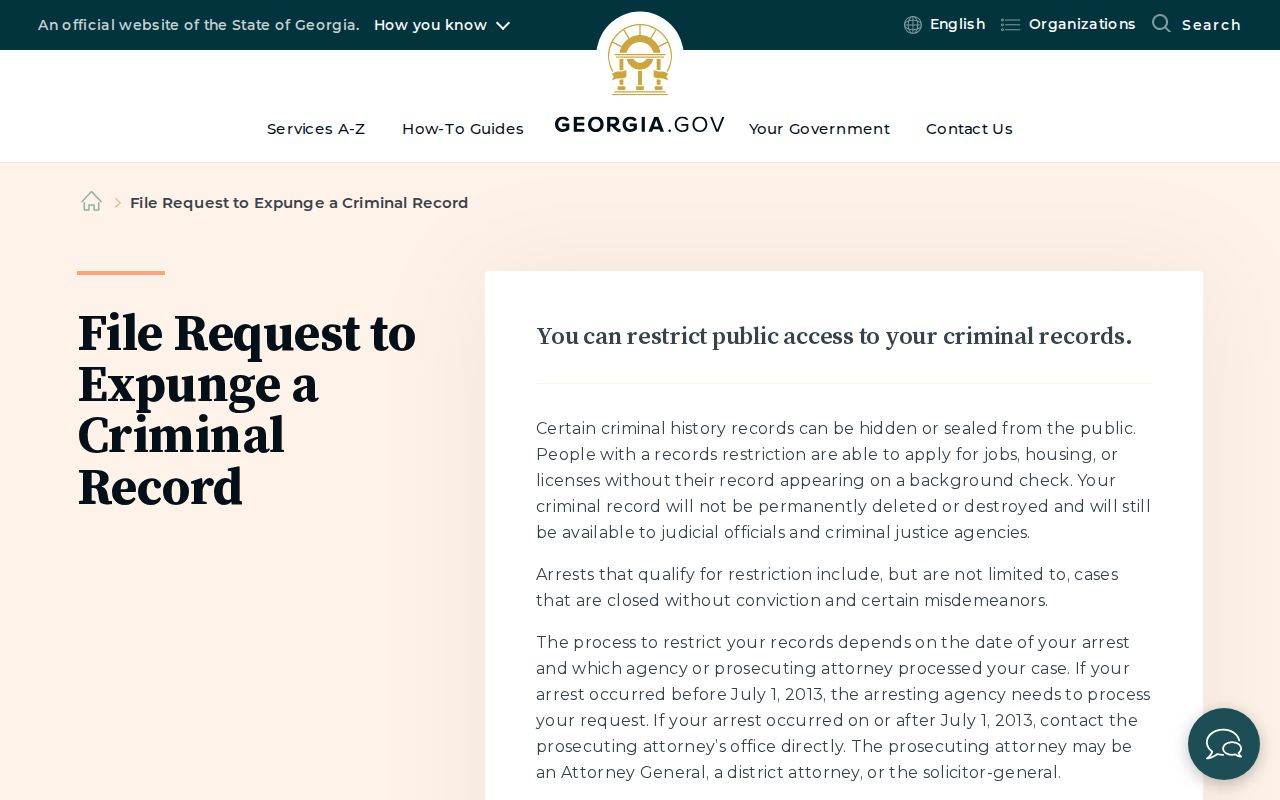 A successful applicant should keep the filed action, allow processing time, inspect the GCIC record, and compare the Evans court index.
Daisy Supervision Records After Court
Felony probation and parole supervision in Georgia runs through the Department of Community Supervision. Its official contact page provides the route for supervision-record questions and open-records contact.  A DCS record is not a Daisy police report or Evans court disposition; it covers the later supervision stage.
The Georgia State Board of Pardons and Paroles provides parole lookup entry points. 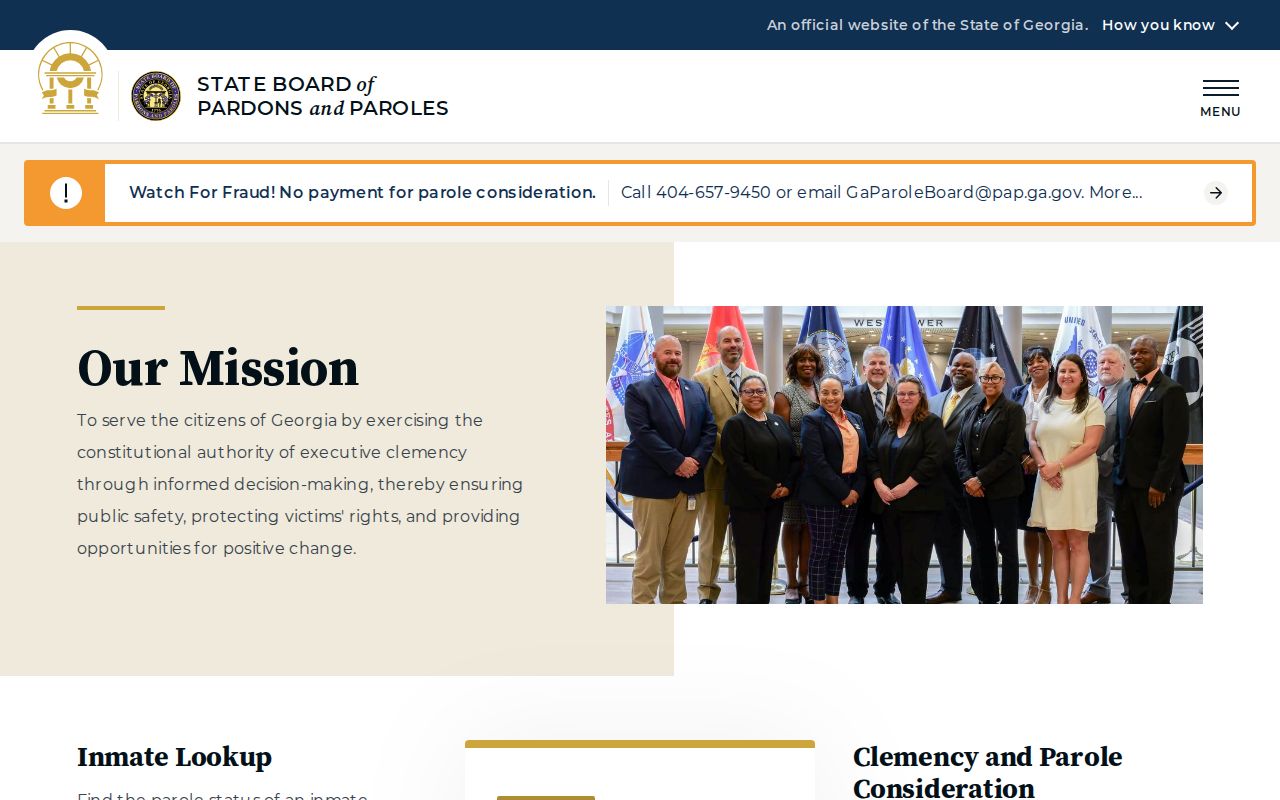 The Board decides parole, while DCS carries out community supervision. A pardon is appended to a record and does not erase the conviction.
Daisy Open Records Requests
The Attorney General's Georgia open-government FAQ explains the three-business-day response framework, costs, and request rights. 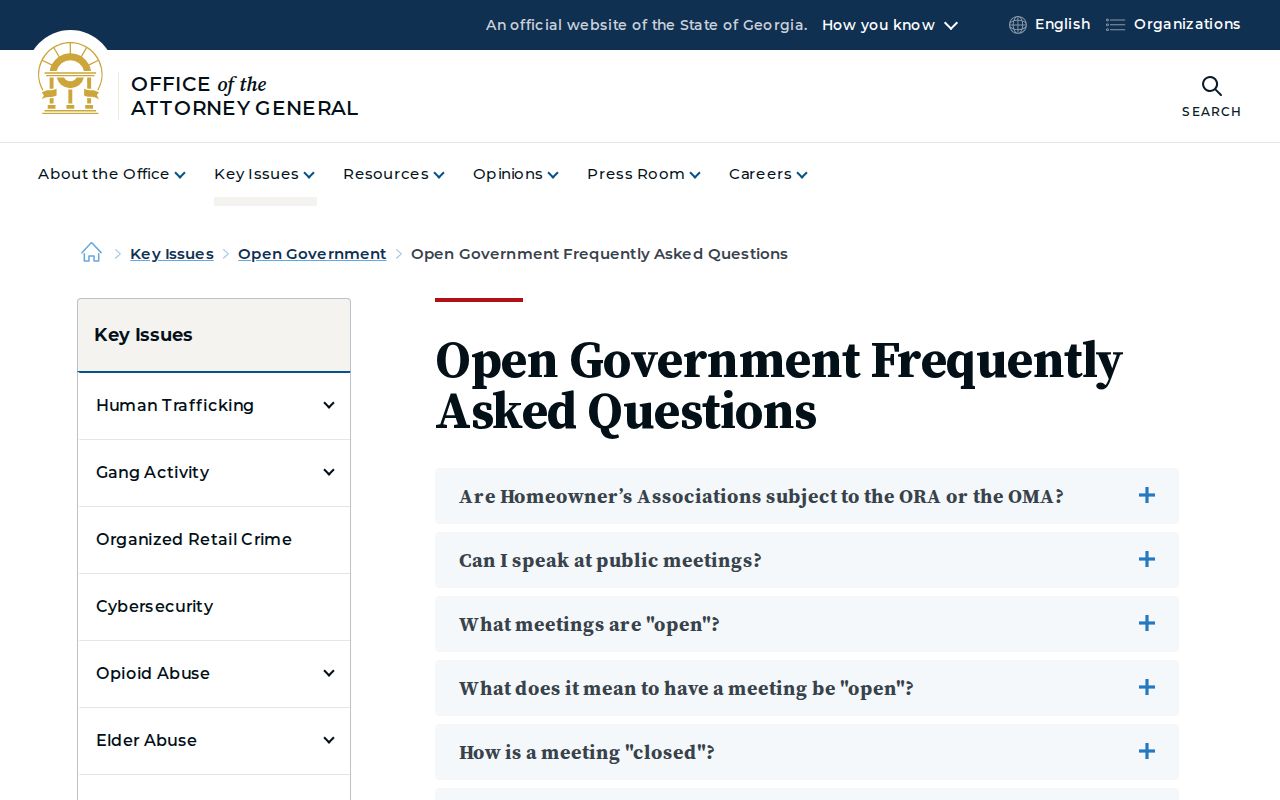 The image reinforces that an agency should respond within the statutory framework even when redaction or volume prevents immediate production.
The first quarter-hour of administrative work is generally free. Later labor may use the lowest-paid qualified employee rate, and prepayment may apply when an estimate exceeds $500. Ask for segregable nonexempt portions and an exact statutory citation for any withholding. Agencies need not create a new compilation, but existing electronic fields remain records.
Daisy Record Access Rules
Public access turns on the record's owner, case stage, and exemptions. Active investigative material, juvenile files, victim or minor data, full birth dates, Social Security numbers, financial accounts, medical information, and protected addresses may be withheld or redacted. A missing attachment in an online index is not proof it does not exist. Ask the clerk whether scanned content is available at the counter.
Key Statutes:
Georgia Open Records Act, O.C.G.A. §§ 50-18-70 through 50-18-77 governs agency requests, responses, fees, and exemptions.
O.C.G.A. § 35-3-35 controls Georgia criminal-history access and dissemination.
O.C.G.A. § 35-3-37 supplies the record-restriction and correction process.
Use the originating office for a certified or authoritative result. Keep the source, search date, and request response with any copy used to challenge stale data.